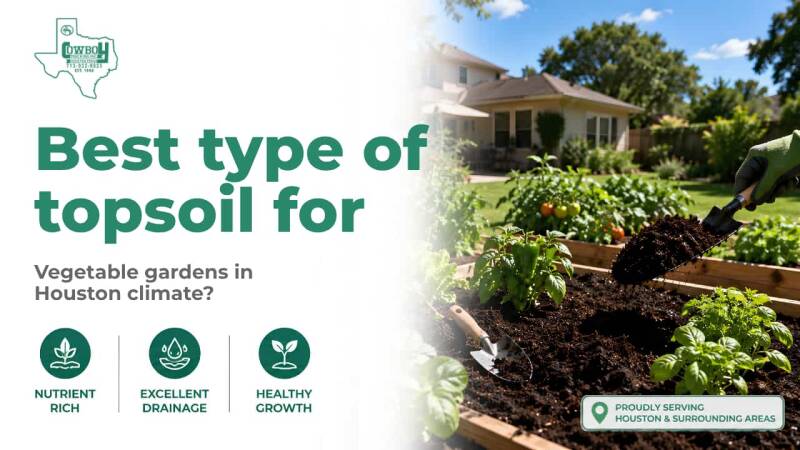
Houston's long growing season offers plenty of opportunities to grow vegetables, but the right soil is essential for healthy plants. Tomatoes, peppers, squash, and herbs all need suitable soil conditions to develop strong roots and produce a good harvest.
If you're wondering what the best soil for a vegetable garden in Houston is, start by looking for a well-draining mix that provides nutrients and retains enough moisture for plant growth. Houston's clay-heavy ground can create drainage and compaction challenges, so choosing the right soil is especially important when starting a new vegetable garden or building raised beds.
Cowboy Topsoil has supplied landscaping materials to Houston-area customers since 1986. In this guide, we'll explain what to look for in vegetable garden soil, how to prepare raised beds, and how to estimate the amount of soil your project needs. Learn more about our history serving Houston homeowners.
Why Houston's Native Soil Is the Enemy of Your Vegetable Garden
Many Houston-area gardens have clay-heavy soil, which can become compacted and drain poorly. Clay soil holds moisture, but when it becomes waterlogged, vegetable roots may struggle to get the air they need. During dry periods, some clay soils can also become hard and develop cracks.
Vegetable plants need a balance of nutrients, moisture, and air around their roots. If your garden soil drains poorly or becomes compacted, adding suitable organic matter and choosing an appropriate soil blend can help improve growing conditions. Before deciding what to add, consider your garden's existing soil, drainage, and the vegetables you plan to grow.
The answer is to bring in the right materials from the start rather than fight your native landscape for years.
What Makes the Best Topsoil for Vegetable Gardens?
The best soil for a vegetable garden should support healthy root growth, provide nutrients, drain excess water, and retain enough moisture for plants to grow. The right mix depends on whether you're planting directly in the ground, filling raised beds, or improving an existing garden. Here are three important things to consider when choosing vegetable garden soil in Houston.
1. Fine Screening - No Rocks, No Clumps
Screened topsoil is processed through a screen to exclude rocks, roots and big debris, leaving a thin, usable texture. This is very important for vegetable gardening. Unscreened dirt generates air pockets around the roots, causes uneven drainage and makes it difficult for young seedlings to become firmly established. The best screened topsoil for Houston gardening is uniformly textured, easy to deal with, and gives roots a smooth path downward.
2. Rich Organic Matter Content
Vegetables are heavy feeders. They pull nitrogen, phosphorus, potassium, and micronutrients from the soil all season long. Nutrient-rich topsoil loaded with organic matter replenishes those nutrients naturally as it breaks down. Look for compost-enriched soil blended with aged compost, it feeds your plants slowly and consistently, improving soil fertility without the need for constant synthetic fertilizer applications.
Organic matter also does something equally important: it improves soil drainage in Houston's clay-heavy ground. It creates small channels and spaces that allow excess water to pass through while retaining just enough moisture for roots. This dual function is the reason compost-enriched soil is the single biggest upgrade you can make to a Houston vegetable garden.
3. Balanced pH for Houston Growing Conditions
Houston soils tend to be slightly alkaline. Many vegetables grow well in slightly acidic to neutral soil, often around pH 6.0 to 7.0, although preferences vary by crop. Don't assume your garden soil is too alkaline based on location alone. A soil test can help you understand your soil's pH and nutrient levels before you decide whether any amendments are needed.
Raised Garden Beds: The Smart Houston Gardener's Move
If your yard has particularly poor drainage or severely compacted clay, don't fight it, rise above it. Literally. Raised garden beds have become the go-to solution for Houston vegetable gardeners, and for good reason.
Raised beds allow you to choose the growing medium rather than relying entirely on the soil beneath them. A suitable mix may include screened topsoil, compost, and other organic materials, depending on the plants you plan to grow and the characteristics of the materials available.
Raised beds can also make gardening easier in areas with compacted ground or poor drainage. However, drainage still depends on the bed's construction, the growing mix, and the site beneath it. Choose a mix suited to vegetables and check that the bed can drain excess water effectively.
For raised beds, we typically recommend a topsoil-to-compost ratio of roughly 60/40. A few cubic yards is usually enough to fill standard 4×8 or 4×12 beds to the ideal 10–12 inch depth.
How Much Topsoil Do You Actually Need?
The amount of soil you need depends on the length, width, and depth of your garden bed. To calculate the volume in cubic yards, multiply the length by the width by the depth in feet, then divide by 27.
For example, a 4 × 8-foot raised bed filled to a depth of 12 inches requires approximately 1.19 cubic yards of growing mix. The final amount may vary slightly depending on settling and how the bed is filled.
If you're filling multiple raised beds or preparing a larger vegetable garden, bulk delivery may be more convenient than buying individual bags. Compare the available topsoil products and delivery options before ordering.
For more examples and help estimating soil quantities for different projects, read our guide on how to calculate how much topsoil you need.
Where to Buy Garden Topsoil in Houston - Skip the Bags, Go Bulk
Here's our honest advice after 40 years in this business: buy bulk, buy screened, buy local.
Bagged topsoil from chain stores is often inconsistent, heavy with filler, and not screened to the standard your vegetable garden deserves. When you source screened topsoil Houston gardeners count on from a dedicated landscape materials supplier, you get what's on the label every time.
At Cowboy Trucking Inc., our nutrient-rich topsoil is screened, consistent, and sourced for Houston's specific growing conditions. We offer topsoil delivery for vegetable gardens Houston wide with free delivery within 10 miles of our yard and flexible load sizes to fit any project. Whether you're filling two raised beds or overhauling a large kitchen garden, we'll help you get the right amount of vegetable garden topsoil Houston demands without overordering or underdelivering.
Frequently asked questions
Ready to Grow Healthier Vegetables in Houston?
The right soil makes all the difference. Whether you're building raised garden beds, improving clay soil, or starting a new vegetable garden, Cowboy Trucking Inc. supplies premium screened, nutrient-rich topsoil delivered across Houston and nearby communities.
Our team can help you choose the right quantity for your project and arrange fast, reliable delivery straight to your property.
Add comment
Comments